Walking after lumbar fusion had become difficult, but the sore side was not the side driving the problem. This reflection follows how a walking assessment changed where hands-on work began.
Three sessions Several weeks After lumbar fusion Lower limb and pelvis
The clinical picture
A client some years after a lower lumbar fusion presented with low back pain and a hip and pelvic restriction that was limiting how far they could walk. Daily walking had dropped well below what they were used to, they could manage only a short walk before needing to stop, and they no longer fully trusted one leg.
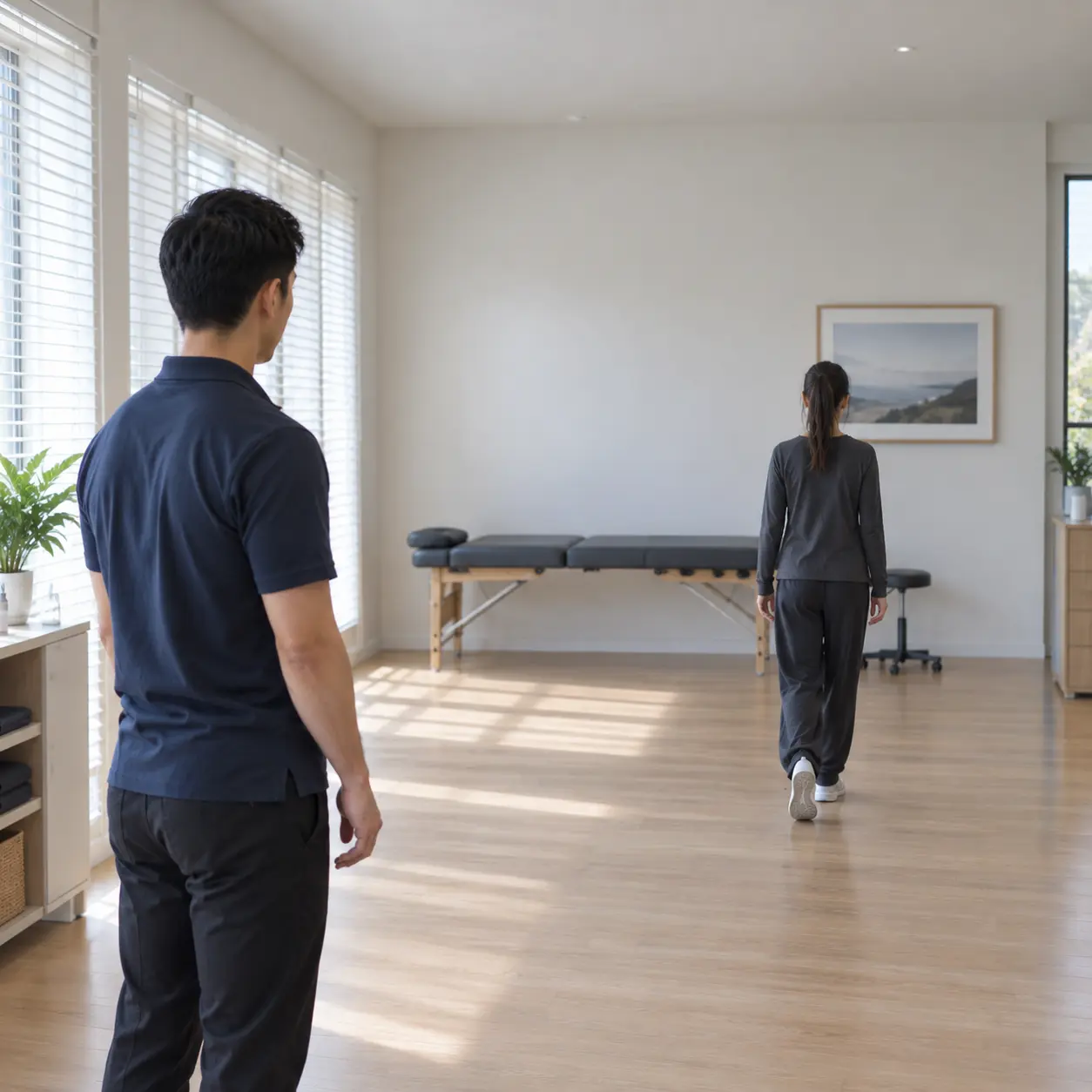
Assessing walking after lumbar fusion
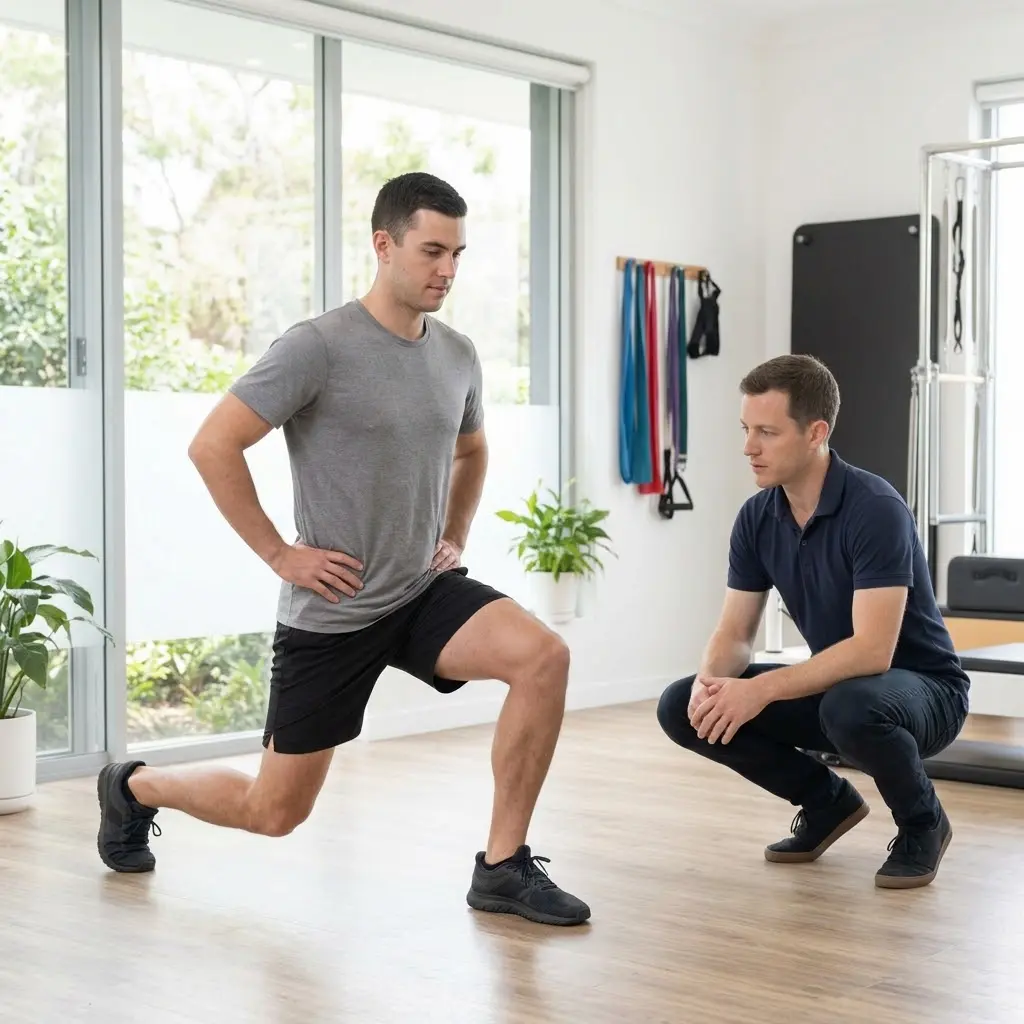
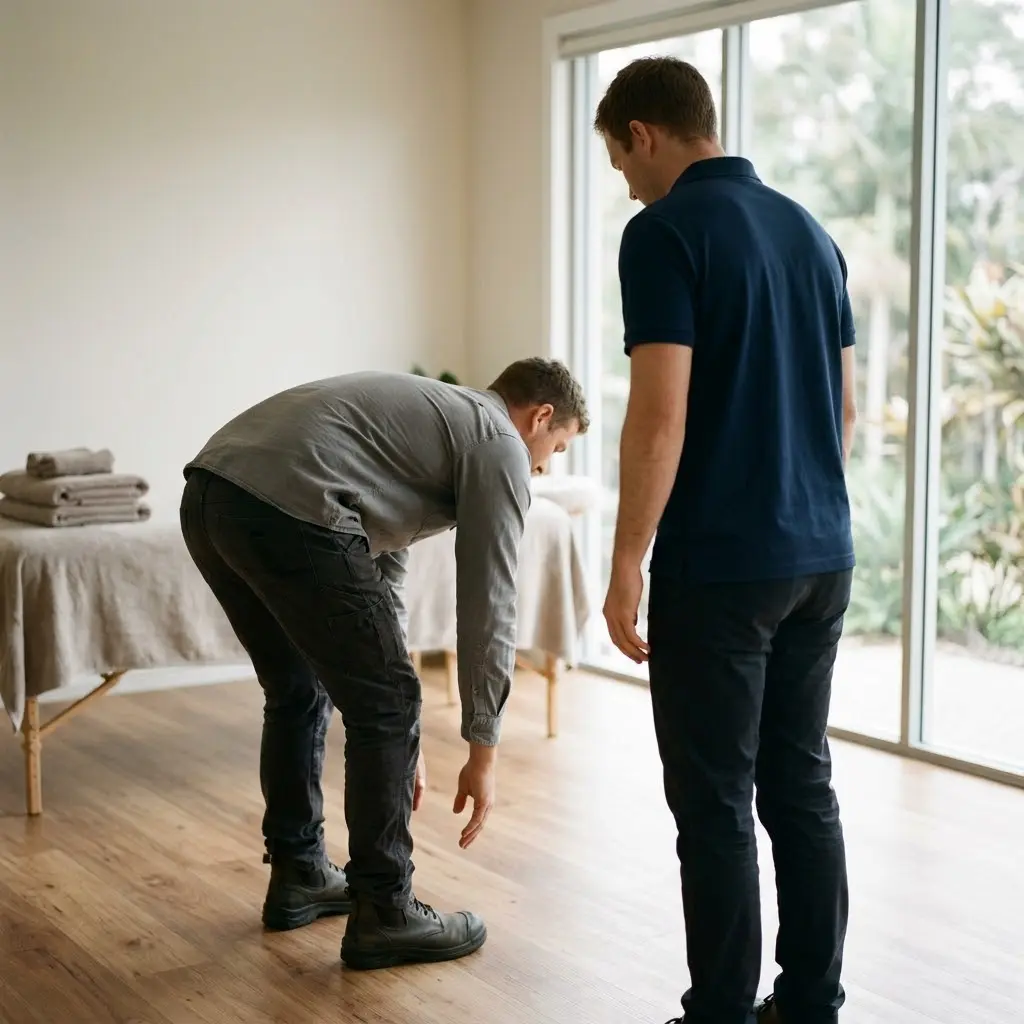
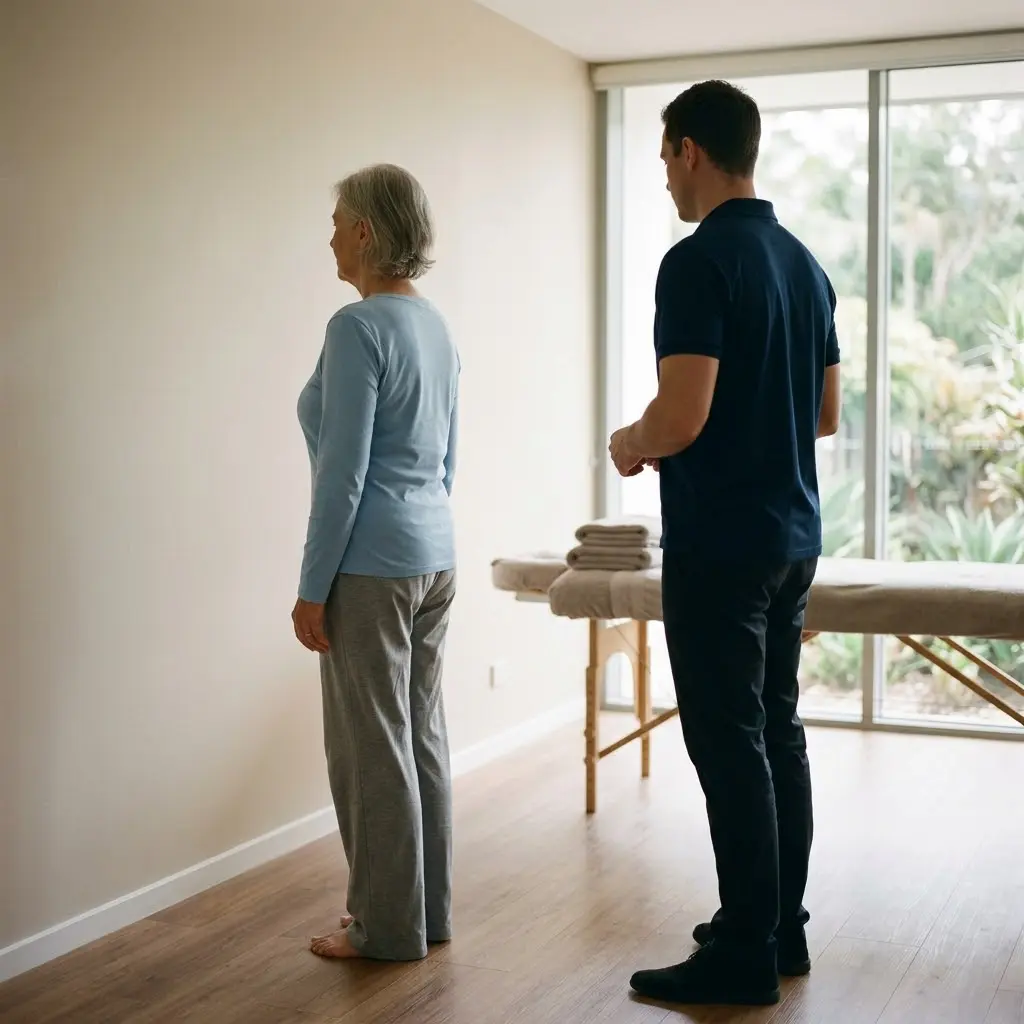
Walking, turning and standing were observed, along with squat, sit-to-stand and trunk rotation. The findings were:
- The client leant to one side when walking, and the opposite leg was doing noticeably less work
- The ankle on that side was restricted, and resisted testing showed that leg was weaker
- The lower back and sacroiliac region on the other side were tight
- Trunk rotation towards one direction was restricted
The pattern read as a single-sided chain: a restricted, weaker ankle, a weaker leg, an asymmetrical walking pattern, and the opposite side of the back and pelvis taking up the slack.
What changed
| Session | Observed or client-reported |
|---|---|
| One | Hands-on work focused on the compensating side of the back and pelvis |
| Two | Walking tolerance reported as longer than at the first visit; pelvis observed as more level when standing |
| Three | Client reported walking for longer without needing to stop; sitting discomfort reported as less frequent |
Some findings were still present at the third session, including a small amount of pelvic shift when walking and tightness through the hip and calf on the weaker side.
One remark from the second session is worth keeping. The pain had moved from the centre of the back towards one side, and the client said this had “ruined my theory about the sciatica”, reasoning that arthritic pain should not shift. That reasoning was sound. When a pain pattern moves, it suggests the way muscles are sharing load has changed. It does not tell us the joint itself has changed.
What this tells us
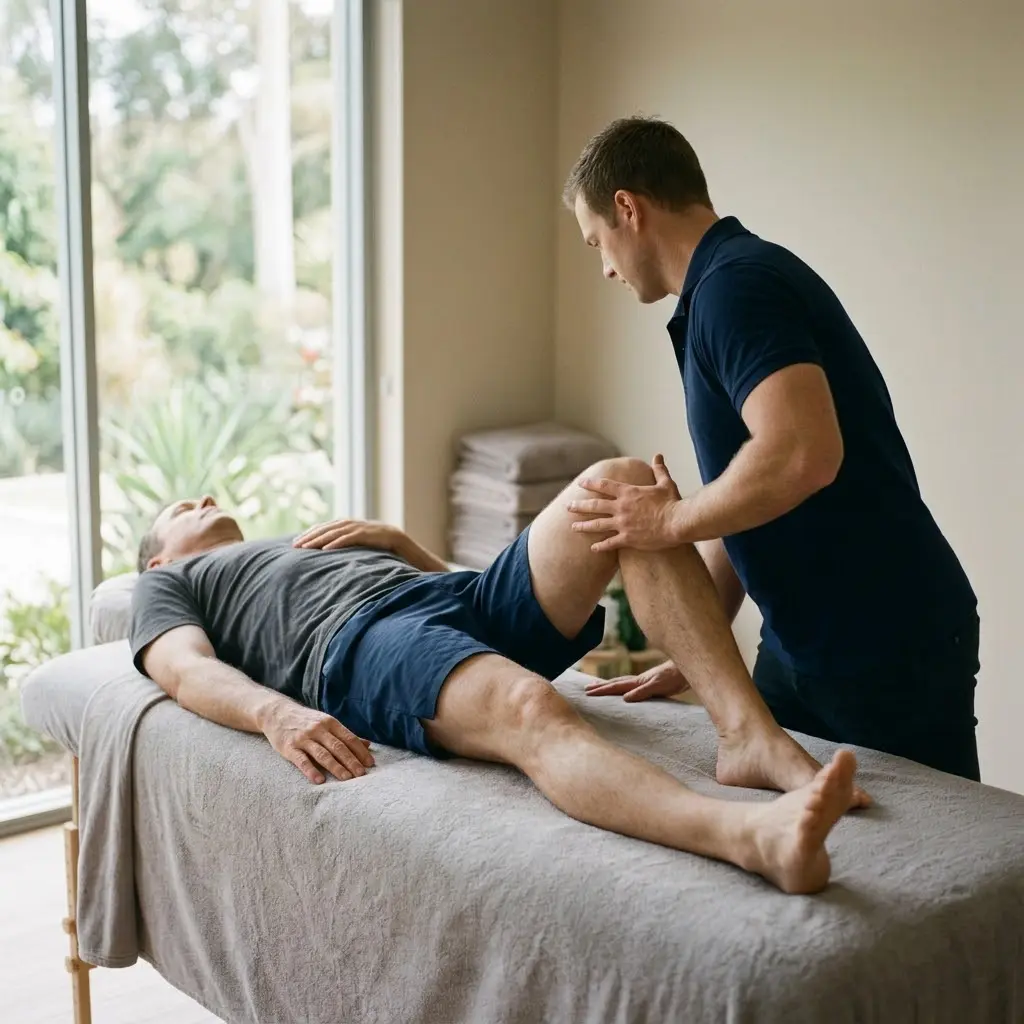
In the first session, hands-on work went to the side that was not complaining, the compensating side, before moving to the hip and ankle that appeared to be driving the asymmetry. Starting at the sorest point would have made sense to the hands, but less sense to the walking pattern.
The surgical history stayed in the background throughout. Nothing here changes a fusion. What was assessed, and what the client reported on, was function: how far they could walk and how long they could sit.
For anyone whose walking after lumbar fusion has become limited, this case is a reminder that the whole walking pattern is worth assessing, not only the area that hurts. That assessment works alongside the advice of the treating surgeon and GP, not in place of it.
- Weakness in one or both legs that is getting worse
- Numbness around the groin, buttocks or inner thighs
- New difficulty controlling your bladder or bowels
- New back pain after a fall
Related case reflections
- Case 24: Exercise After Spinal Surgery
- Case 32: Right Shoulder Pain and Abdominal Tension in Standing
- Case 5: Acute Low Back Pain in a Construction Worker
- Browse all case reflections
The assessment and hands-on care described here took place at Heal Young Massage, Varsity Lakes. Hill Yang is an ESSA Accredited Exercise Scientist (AES #17005) and a Remedial Massage Therapist (MMA #031045).