This case looks at acute low back pain in a construction worker, and how a functional movement assessment fitted alongside his medical care.
Presentation
A man working in construction attended with severe low back pain that had come on recently. The pain had been bad enough for him to attend the emergency department more than once, where serious causes were assessed, and he was unable to work.
He had also received care from another health professional, who had advised that recovery could take several weeks. He was keen to understand how he could move more comfortably in the meantime.
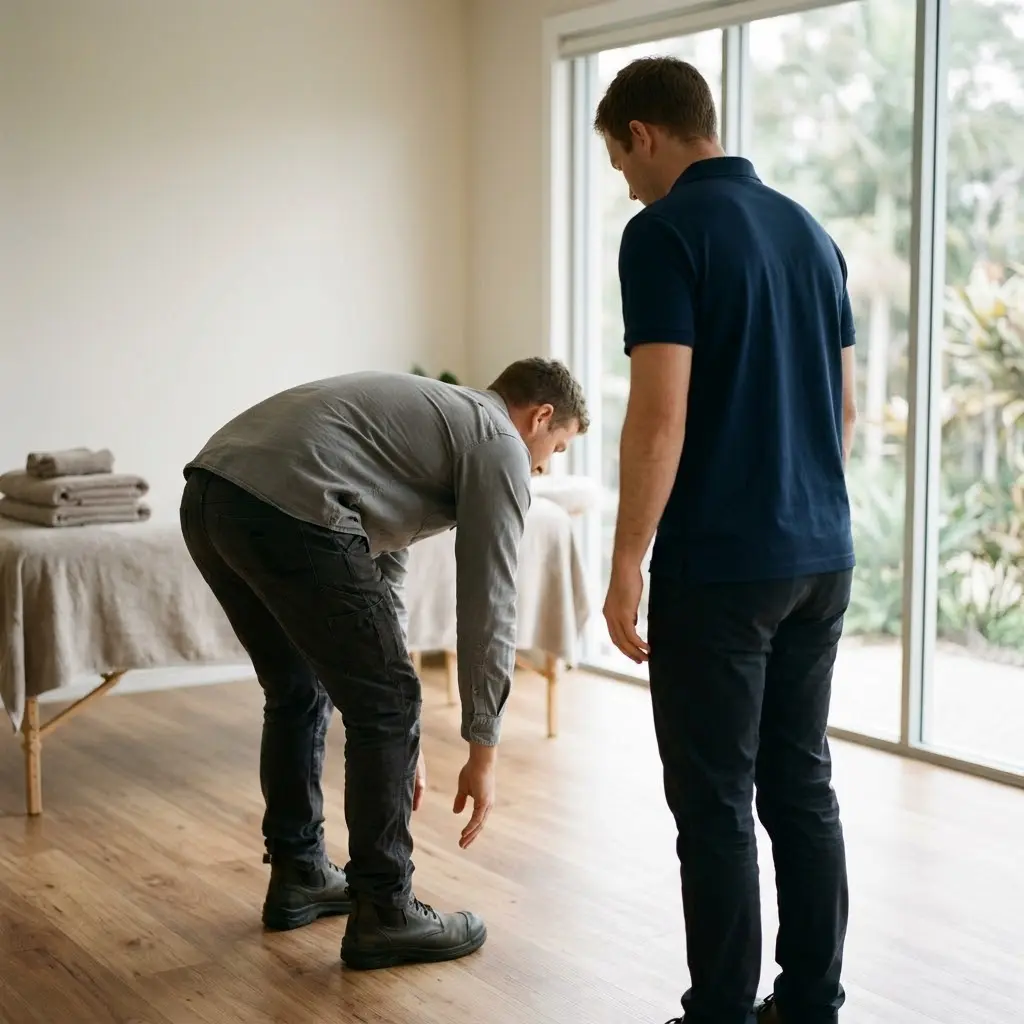
Assessing acute low back pain
The assessment looked at how he moved as a whole, not only at the painful area. This included how he walked, bent forward, shifted his weight and picked up a light load. He was moving very guardedly, and he tended to brace through his back and hips during these movements.
Approach
The session combined hands-on care for the lower back and hips with movement-based work, including:
- Reassessing each movement as the session went on
- Gentle activities to help him move with less guarding
- Practising walking, bending and light lifting in a comfortable range
What the client reported
By the end of the session, he reported that walking, bending and lifting a light load felt considerably more comfortable.
When he returned around six months later for an unrelated shoulder concern, he reported that his back had been comfortable and that he had been working as usual.
Acute low back pain very often improves over time on its own, and the care he received from other health professionals is also likely to have contributed. These observations reflect one person’s experience.
Why acute low back pain matters for physical workers
For people in physically demanding jobs, a sudden episode of back pain can mean lost income, time off work and uncertainty about returning safely. Movement often feels frightening when the back is sore, and it is common to brace and guard, which can make everyday tasks feel harder.
A movement assessment can help identify patterns worth working on, alongside guidance from a GP or other health professional. Gradually returning to normal movement, at a level that feels manageable, is generally encouraged for most people with acute low back pain.
- Numbness around the groin, buttocks or inner thighs
- New difficulty controlling your bladder or bowels
- Weakness or numbness in one or both legs that is getting worse
- Fever, unexplained weight loss, or pain after a significant fall or accident
Reflection
This case was a reminder of how much acute low back pain can affect someone’s work and livelihood, and of the value of looking at how a person moves as a whole. Every episode of back pain is different, and recovery times vary widely.
Anyone with severe or worsening back pain should be assessed by a GP first. Movement-based care can then sit alongside their medical guidance.
Related case reflections
- Case 13: Long-Standing Training Injury
- Case 11: Long-Standing Back and Knee Pain
- Browse all case reflections