Leg pain with clear scans can leave people unsure where to turn next. This reflection covers what a movement assessment added after an impact injury, how things changed over several sessions, and why a medical review sat alongside care.
Several sessions Several months After an impact injury One lower limb and trunk
The clinical picture
A client presented more than a year after an impact injury to the lower rib region and abdomen. Since then they had felt a constant burning through one leg, an ankle that no longer felt reliable, and a tender point in the groin that had not fully settled. Imaging at the time had been reported as clear.
Sleeping on the affected side had become difficult, they had stopped lifting, and going up stairs reliably brought the symptoms on.
The leg pain was not purely musculoskeletal. Other medical factors, being followed up by the client’s medical team, added to the complexity of the picture and sat outside the scope of this assessment.

Assessing leg pain with clear scans
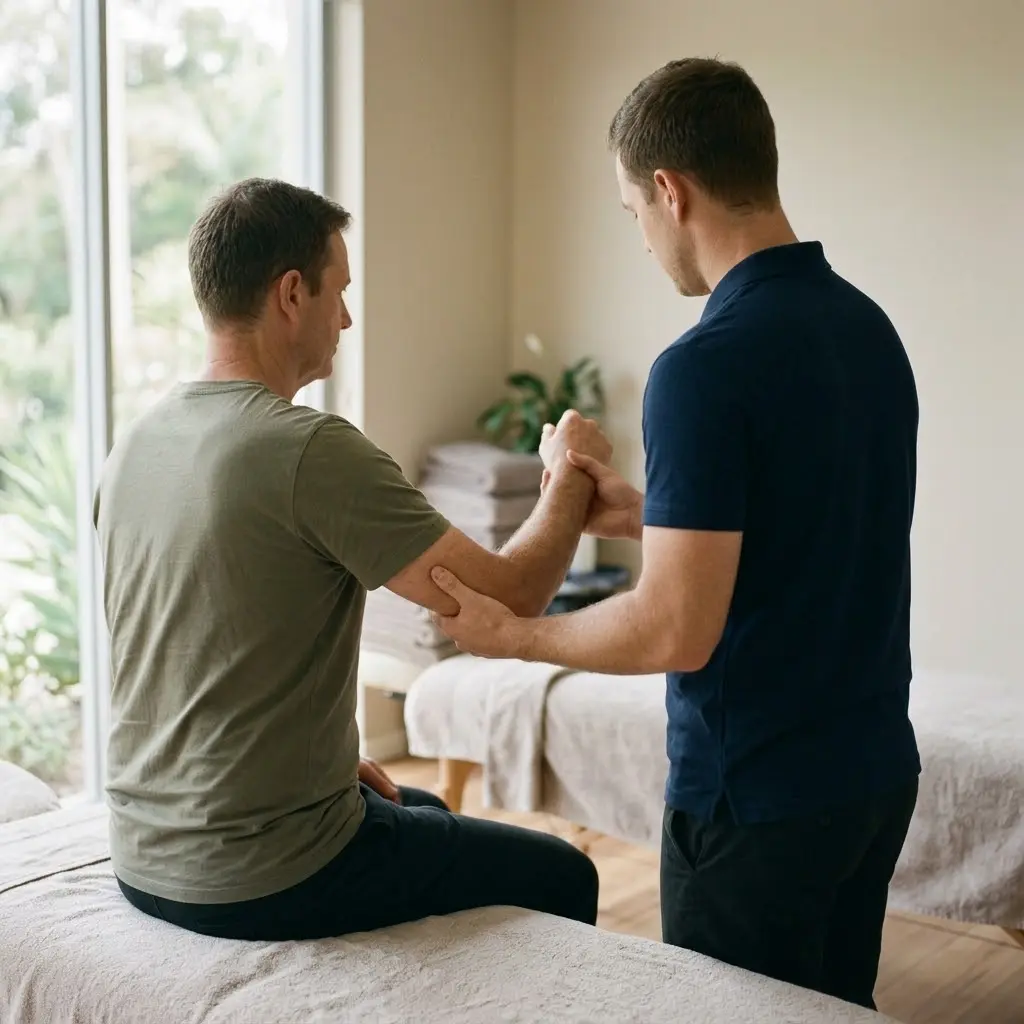
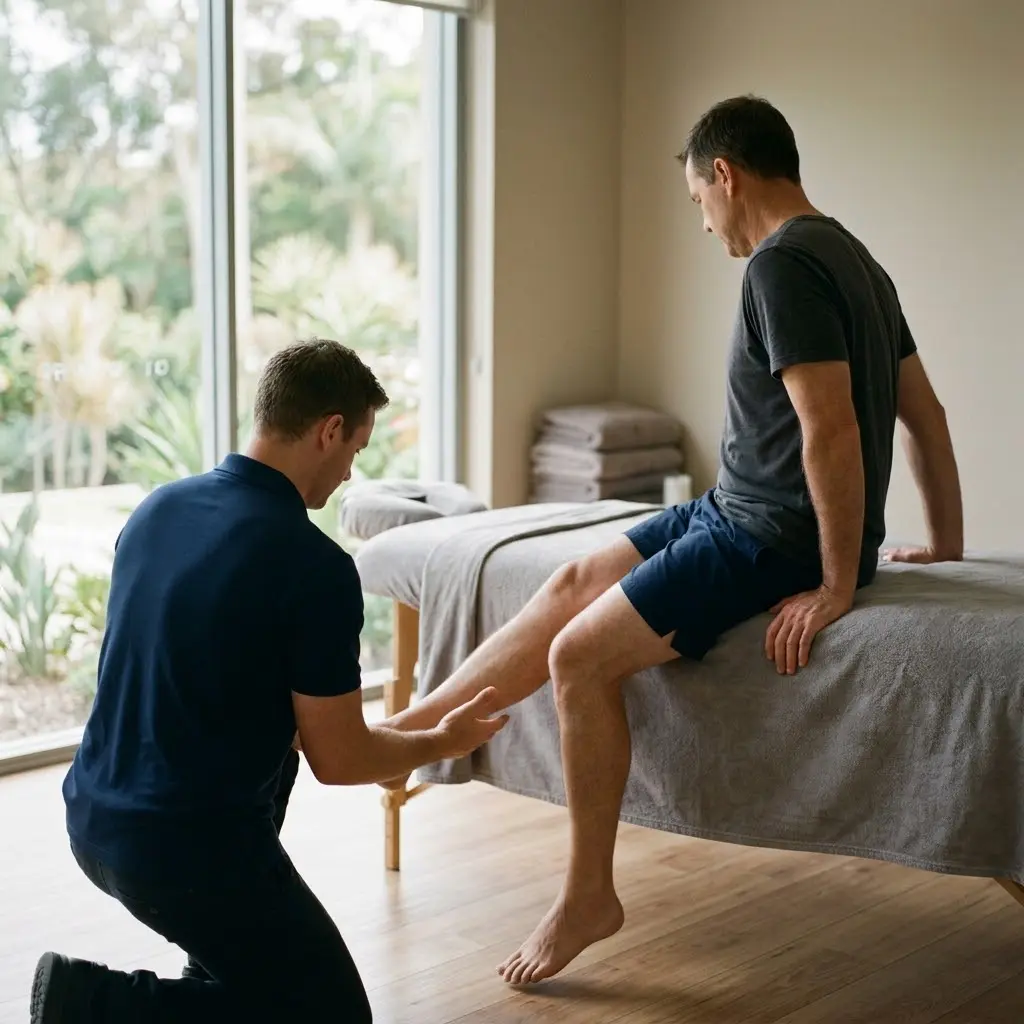
The pain was in the leg. Over the first sessions, the pattern that emerged ran through several areas rather than one:
- The original injury site, with residual scar tissue and one distinctly tender point
- Restriction through the hip flexor
- Restriction through the lower rib cage and thoracic spine
- Fascial restriction through the lumbar spine
- Reduced ankle stability, which the client described as no longer trusting the limb
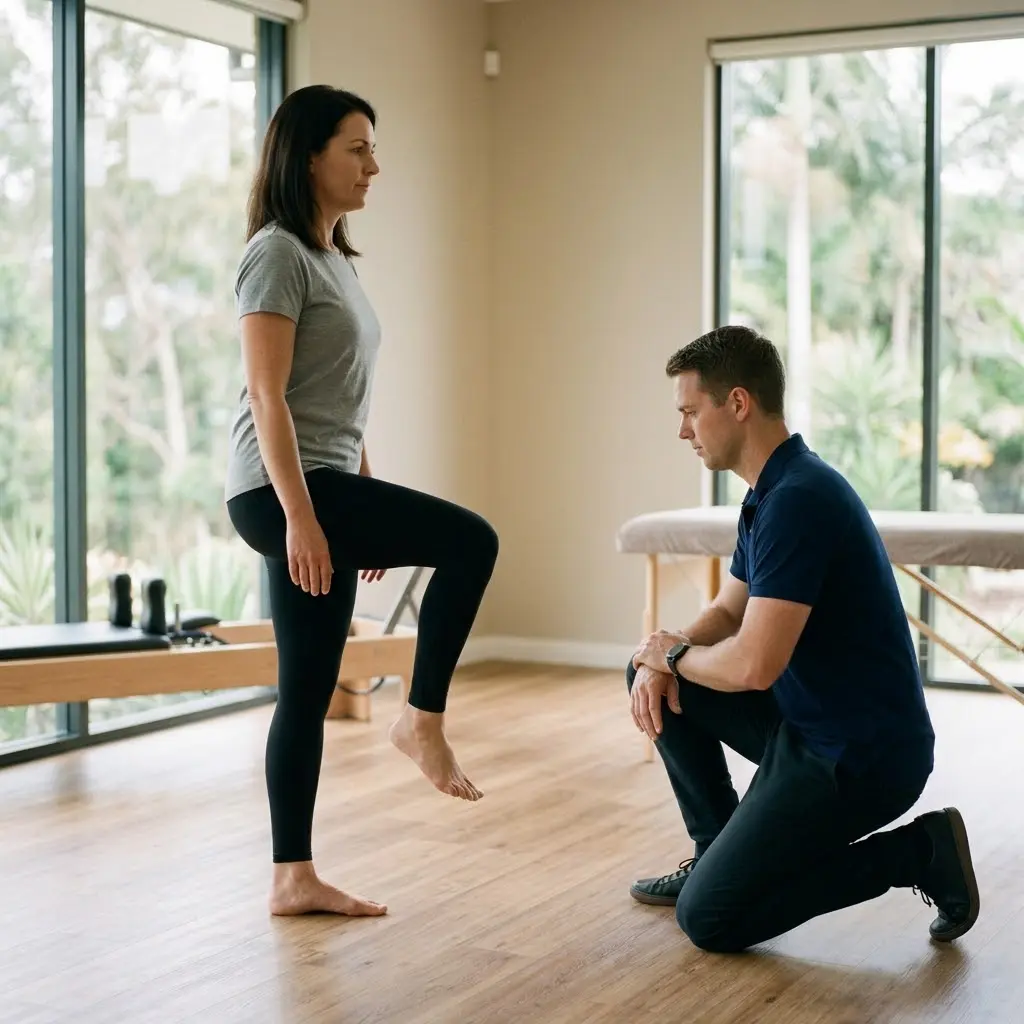
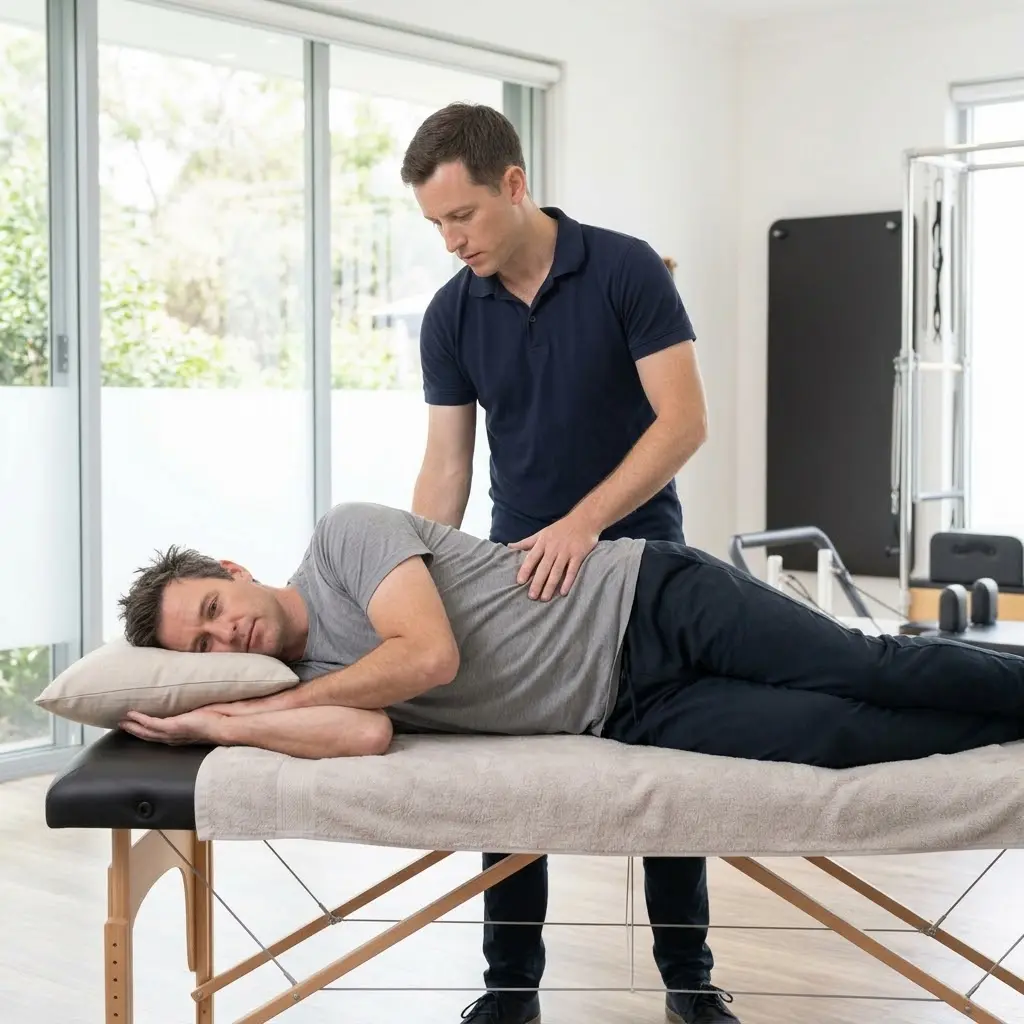
Walking, turning, walking backwards, squatting, stairs, trunk flexion and resisted side-lying tests were repeated before and after each session. The findings stayed consistent: the further along the chain we looked, the more the ankle appeared to sit at the end of a sequence rather than at its start.
What changed
| Stage | Observed or client-reported |
|---|---|
| Early sessions | Client reported sleeping on the affected side again; squatting depth observed to increase; walking observed as more even |
| Middle sessions | On one visit, foot symptoms were reported as worse on waking, with a visible change in the foot. A medical review was arranged to rule out other causes, and supportive taping was used for walking |
| Later sessions | Client reported the hip and groin discomfort as much less of a feature, sleep continuing to be better, and day-to-day activity easier. The leg pain was still present, but described as more manageable |
Across the sessions, the client reported changes in several areas of daily life, with sleep among the first. The change was not complete: the leg pain had not gone, and one visit brought a new symptom that needed a medical opinion. What the client described by the end was pain that had become more manageable, and a body that was easier to live in.
What this tells us
The painful site is not always the source. The burning was in the leg. The restrictions found repeatedly were further up the chain: hip flexor, rib cage and lumbar fascia, with the ankle at the end of it.
Pain that moves is information. When symptoms shift, the way load is travelling has changed. That is not the same as the tissue having changed.
Clear imaging and ongoing symptoms can sit side by side. Imaging answers some questions well. A movement assessment answers different ones: how a person moves, and what they can and cannot do. For leg pain with clear scans, the two work alongside each other. Where symptoms change, or a medical cause is possible, medical assessment comes first.
Not every part of the pain is musculoskeletal. When other medical factors are involved, hands-on care and movement work can address one part of the picture. Knowing which part, and leaving the rest with the medical team, is part of the work.
Progress does not always mean pain-free. For someone who has lived with pain for a long time, sleeping through the night and finding pain more manageable can matter as much as the pain itself.
- New weakness or loss of sensation
- Changes in bladder or bowel control
- A limb that becomes hot, discoloured or rapidly more sensitive
- Pain after a significant injury that is not settling
Related case reflections
- Case 18: Back Pain and Breathing After Trauma
- Case 10: Long-Standing Low Back Pain and Scar Tissue Movement
- Case 38: The Pain Was Not Where the Problem Was
- Browse all case reflections
The assessment and hands-on care described here took place at Heal Young Massage, Varsity Lakes. Hill Yang is an ESSA Accredited Exercise Scientist (AES #17005) and a Remedial Massage Therapist (MMA #031045).