This case looks at strength and motor control, and why being strong in the gym does not always mean a muscle can produce force smoothly during everyday movement.
Presentation
A middle-aged man in a physically demanding job attended with episodes where his right leg seemed to suddenly lose force while he was walking or running. In the gym, his strength testing results were good, and he could lift well with that leg. The episodes were unpredictable and had begun to affect his confidence at work.
He had also had a significant abdominal injury in the past.
Assessing strength and motor control
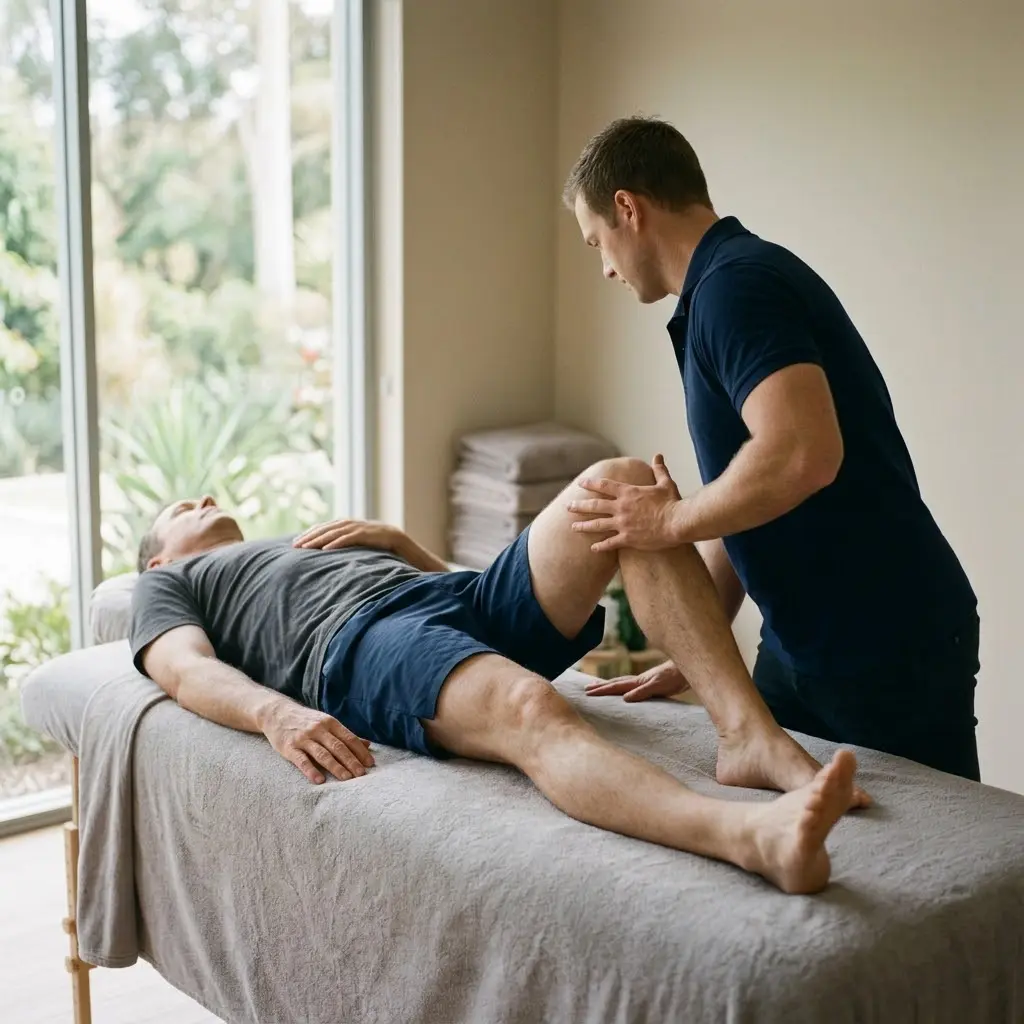
Instead of only testing maximum strength, the assessment looked at how well he could produce force through different hip positions and during movement. In some hip positions, his leg produced force well. In others, his ability to push against resistance dropped noticeably, even though his overall strength was high.
The positions where his force dropped seemed to relate to the area of his previous abdominal injury. It is possible that changes in the tissues around the old injury were affecting how smoothly the trunk and hip worked together, although this cannot be confirmed.
Approach
Sessions combined hands-on care with movement-based work, including:
- Myofascial work around the abdomen, trunk and hip
- Coordination exercises linking the trunk and the hip
- Practising force production in the hip positions where it had dropped
- Gradually returning these patterns to walking and running
What was observed and reported
On reassessment, his force production became more consistent through the different hip positions. He reported that his walking and running felt more controlled, and that he felt more confident in his leg.
These observations reflect one person’s experience, and other factors may also have contributed.
Why strength and motor control are not the same thing
Strength is the ability of a muscle to produce force. Motor control is the ability of the nervous system and body to use that force at the right time, in the right amount and in the right position. A person can test as strong in the gym, where movements are slow and predictable, yet still have difficulty producing force smoothly during faster, changing movements like running.
This is why exercise scientists often look beyond strength alone, considering coordination, timing and how different parts of the body work together. Testing force in several positions, and during movement, can reveal differences that a single maximum-strength test may miss.
Reflection on strength and motor control
This case was a reminder that when someone feels their leg “lose power”, more strength training is not always the whole answer. Looking at strength and motor control together can add useful information to the picture.
A leg that suddenly gives way, weakens or goes numb should always be assessed by a GP first, as it can have nerve-related or other medical causes. Movement-based care can then sit alongside their medical guidance.
Related case reflections
- Case 13: Long-Standing Training Injury
- Case 34: High Flexibility and Low Stability
- Browse all case reflections