Presentation
A 12-year-old boy was brought in by his mother with a four-year history of unexplained leg pain. His legs were very sensitive to touch, and he found it hard to put weight through them. His medical team had carried out extensive investigations, including blood and urine tests, X-ray, CT and ultrasound, and no clear cause had been found.
Over time, the ongoing pain and limited movement had affected how he walked, how he slept and how he felt. His mother was worried about the long-term effects on his growth and development.
Assessment
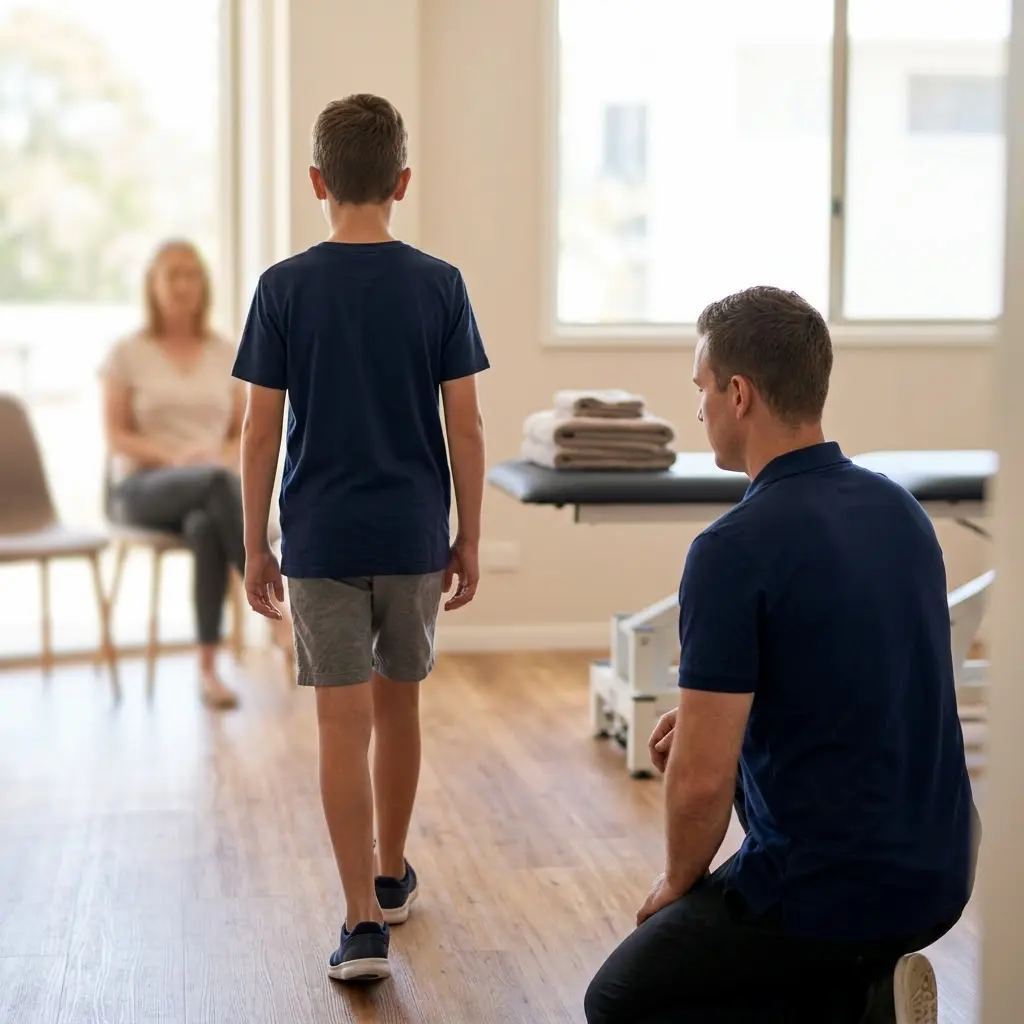
At the first session, he appeared tense and guarded, with frequent involuntary muscle twitching and a noticeably fast resting heart rate. Some swelling was visible in his lower legs, and he moved in a very protective way, avoiding putting load through his legs.
Approach
Sessions began with gentle hands-on care aimed at helping him feel calm and settled, before any work on his legs. Once he was more settled, care moved to the more painful right leg, then the left, combining hands-on work with simple movement and walking tasks.
What was observed and reported
During the first session, he appeared calmer and the twitching eased. As the session went on, he said he could move his legs more freely, and on reassessment his walking looked straighter and steadier.
Later, his family reported that he was missing less school, was walking and running with friends, and seemed more confident and engaged.
Changes seen within a single session do not always last, and they can have many possible explanations. These observations reflect one child’s experience.
Reflection
Unexplained leg pain in children can affect far more than the legs. Movement, sleep, schooling and confidence can all be affected over time. This case was a reminder of the value of a calm, gentle starting point and of looking at how a child moves, alongside ongoing medical care.
Any child with ongoing pain, swelling, a fast heart rate or difficulty walking should be assessed by a GP or paediatrician first, and should stay under their care. Movement-based care can then sit alongside their medical guidance.
Related case reflections
- Case 35: Childhood Movement Coordination and Avoiding Physical Activity
- Case 2: Rapid Adolescent Growth and Movement Control
- Browse all case reflections