
This case looks at back pain in late pregnancy, and how pelvic movement and load sharing were considered as part of gentle, pregnancy-appropriate care.
Presentation
A woman at 34 weeks of pregnancy attended with significant lower back discomfort and a feeling that her pelvis was stiff and restricted. She was under the care of her pregnancy care team throughout. The discomfort was making walking, turning in bed and getting up from a chair harder.
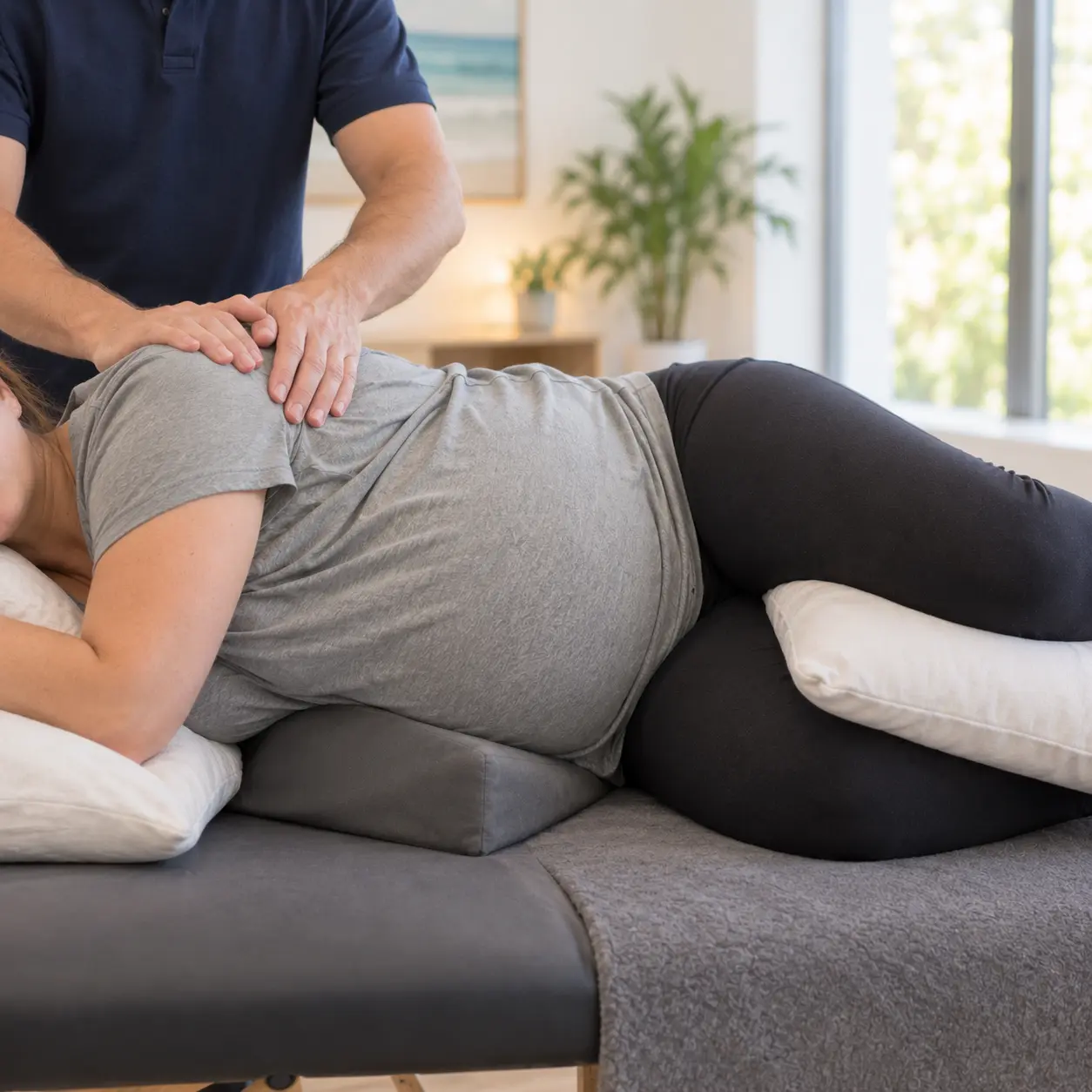
Assessing back pain in late pregnancy
The movement assessment looked at how she walked, shifted her weight and transferred load between her legs. Her pelvis appeared to move less evenly from side to side, with one side seeming to take more of the load during walking and standing.
Approach
Care was gentle and adapted for late pregnancy, with positioning and pressure adjusted for comfort and safety throughout. It included:
- Side-lying soft tissue work for the back and hips, with pillows supporting the head, bump and knees
- Gentle, comfortable movement for the pelvis and hips
- Simple strategies for walking, turning and getting up more comfortably at home
No techniques were directed at the abdomen or the baby.
What was observed and reported
On reassessment, her walking and weight shifting appeared more even, and she reported that her lower back felt more comfortable when moving.
These observations reflect one person’s experience during one stage of pregnancy. Comfort can change from day to day in late pregnancy for many reasons.
Why back pain in late pregnancy is so common
As pregnancy progresses, the body goes through major changes. The growing baby shifts the centre of gravity forward, the lower back often takes on more load, and hormones help the ligaments around the pelvis become more flexible in preparation for birth. Together, these changes can make the lower back and pelvis feel sore, stiff or uneven.
For many people, gentle movement, pregnancy-appropriate exercise and soft tissue care can be part of feeling more comfortable, alongside the advice of their midwife, GP or obstetrician.
- Vaginal bleeding or fluid loss
- Regular tightenings or contractions before 37 weeks
- Reduced or changed baby movements
- Severe or sudden pain, headache, vision changes or swelling
Reflection on back pain in late pregnancy
This case was a reminder that back pain in late pregnancy often involves the whole pelvis and how load is shared between the legs, not just the lower back. Gentle, carefully positioned care can be one way to support comfort during this stage.
Anyone who is pregnant should check with their midwife, GP or obstetrician before starting massage or new exercise, and continue with their regular pregnancy care. Remedial massage does not change the position of the baby or replace obstetric care.