Presentation
A client in their early thirties attended with scoliosis that had been present for more than 30 years. Family members were trained in manual manipulation, and regular adjustments had been used for symptom relief. These adjustments eased discomfort for a short time, but the relief didn’t last, and the client needed them every one to two weeks to manage recurring shoulder and lower back tension.
Assessment
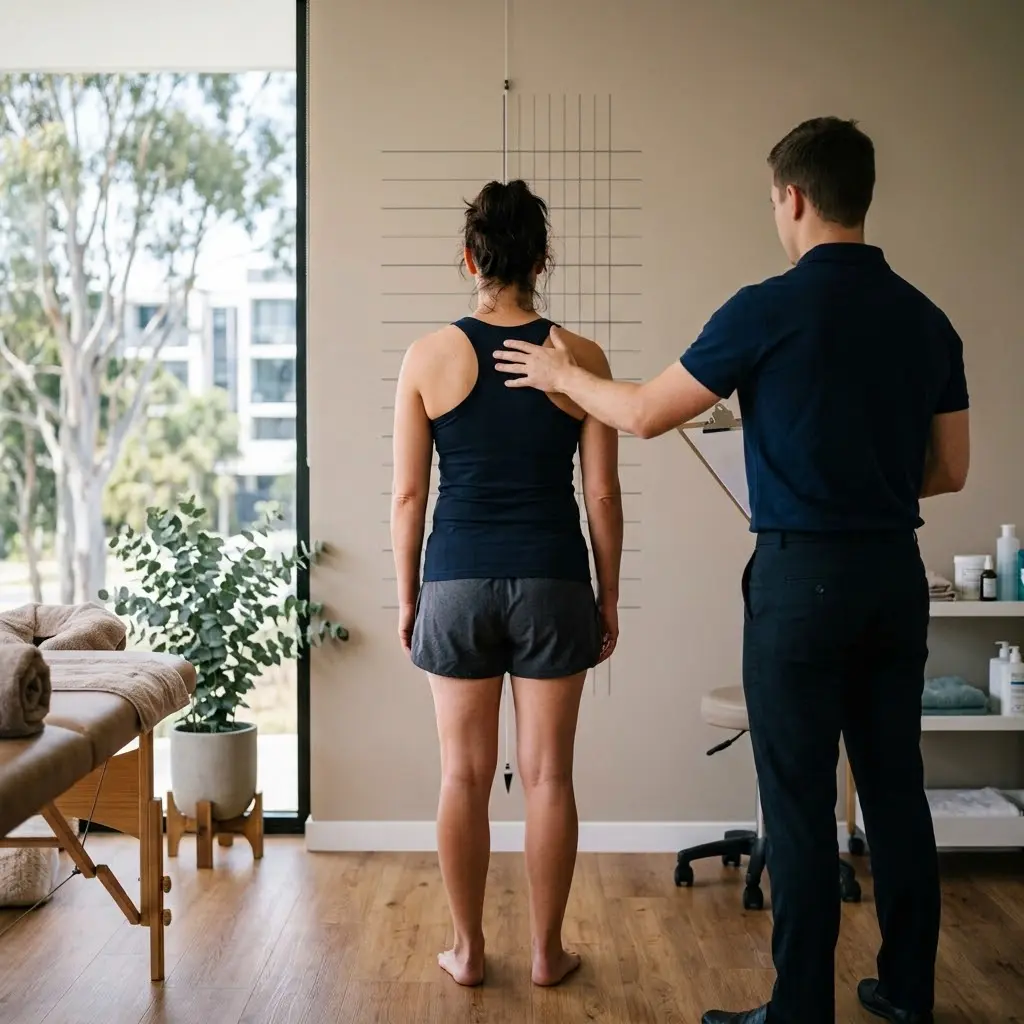
Postural and movement assessment suggested that the way load was shared through the trunk during everyday movement, rather than the spinal curve alone, may have been contributing to the recurring tension the client described.
Approach
Rather than aiming for short-term relief, sessions combined hands-on care with movement-based work focused on spinal alignment, load distribution and movement control through the trunk.
What the client reported
Over several sessions, visible changes in standing posture were observed. At a follow-up nine months later, the client’s posture appeared similar to how it looked at the end of the sessions, and they had not returned to regular manual adjustments. The client reported needing adjustments less often and noticing less shoulder and lower back discomfort during daily activities.
No imaging was taken, and no change in the underlying spinal structure is implied.
Reflection
Frequent short-term relief and longer-term self-management are different goals. In this case, building awareness of how load moved through the body seemed to be a useful part of the picture, alongside hands-on care.
Scoliosis presentations vary widely. Anyone with scoliosis, especially if the curve appears to be changing or symptoms are getting worse, should be assessed by a GP or medical specialist first. Movement-based care can then sit alongside their medical guidance.
Related case reflections
- Case 8: Long-Term Thoracic and Spinal Restriction
- Case 32: Persistent Right Shoulder Pain and Abdominal Tension
- Browse all case reflections