Presentation
A man in his mid-50s attended with severe pain in both hands, loss of hand sensation in his fingers, and increasing difficulty using his upper body. For many years he had worked three physically demanding jobs, often going several days at a time without sleep.
In the previous year, he had developed intense burning pain across both palms and forearms, which he described as feeling like fire. Neurological testing by his medical team later identified severe peripheral nerve damage associated with long-standing carpal tunnel syndrome. Surgery on both hands reduced the burning pain, but he was advised that the loss of finger sensation was likely to be permanent.
He relied heavily on his eyes to grip objects and needed intense concentration just to hold a pen briefly. Earlier this year, he had also developed right-sided chest, mid-back and lower back pain, with sharp pain when lifting his arm.
Assessment
Assessment showed markedly reduced movement through the spine and shoulders. His hands felt very cool to touch, and he reported no sense of touch in his fingers.
Approach
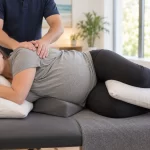
Early sessions combined hands-on care with movement-based work focused on the spine, shoulder and rotator cuff mobility, and breathing muscle function, to support how he could move his upper body.
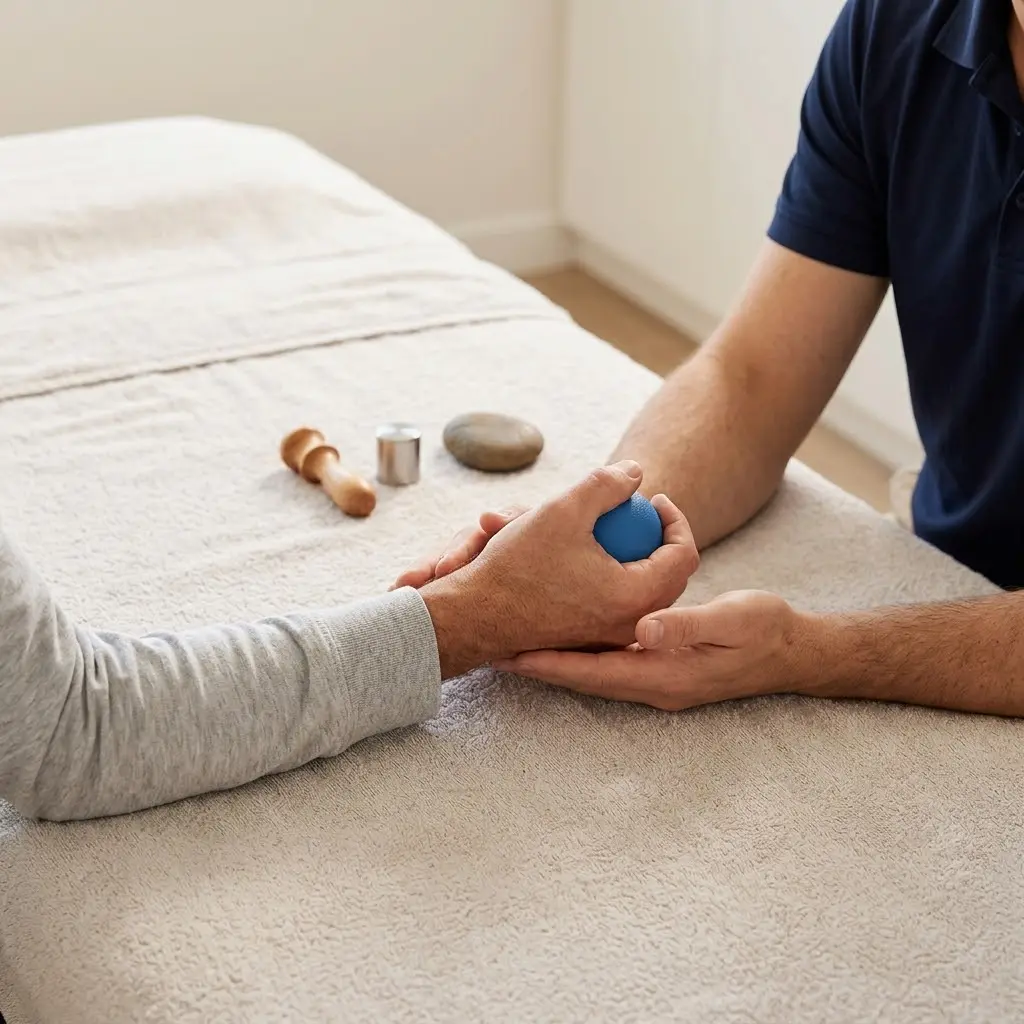
As upper-body movement became easier, sessions progressed to graded grip activities:
- Gripping tasks with full visual guidance
- The same tasks with gradually less reliance on vision
- Handling objects with his eyes closed
What the client reported
Over time, he became able to hold objects of different sizes more steadily. His hands were also noticed to feel warmer to touch over the same period.
Later, he reported faint tingling in some of his fingers. This was not expected given his earlier neurological advice, and it is not known what contributed to it. It should not be read as recovery of the nerve damage, and peripheral nerve damage of this severity does not typically reverse.
Reflection
This case was a reminder that function and sensation are not the same thing. Even when sensation is very limited, practising grip with gradually less visual support may help some people use their hands with more confidence in daily life.
Anyone with burning pain, numbness or weakness in the hands should be assessed by a GP or medical specialist first. New chest pain should always be checked by a doctor promptly. Movement-based care can then sit alongside their medical guidance.
Related case reflections
- Case 30: CMT1 and Neuromuscular Training
- Case 22: Guillain–Barré Syndrome With Early Functional Change
- Browse all case reflections