Presentation
A man with a complex neurological history had experienced multiple strokes over eight years. These had affected his vision, hearing, speech processing and movement on the right side of his body.
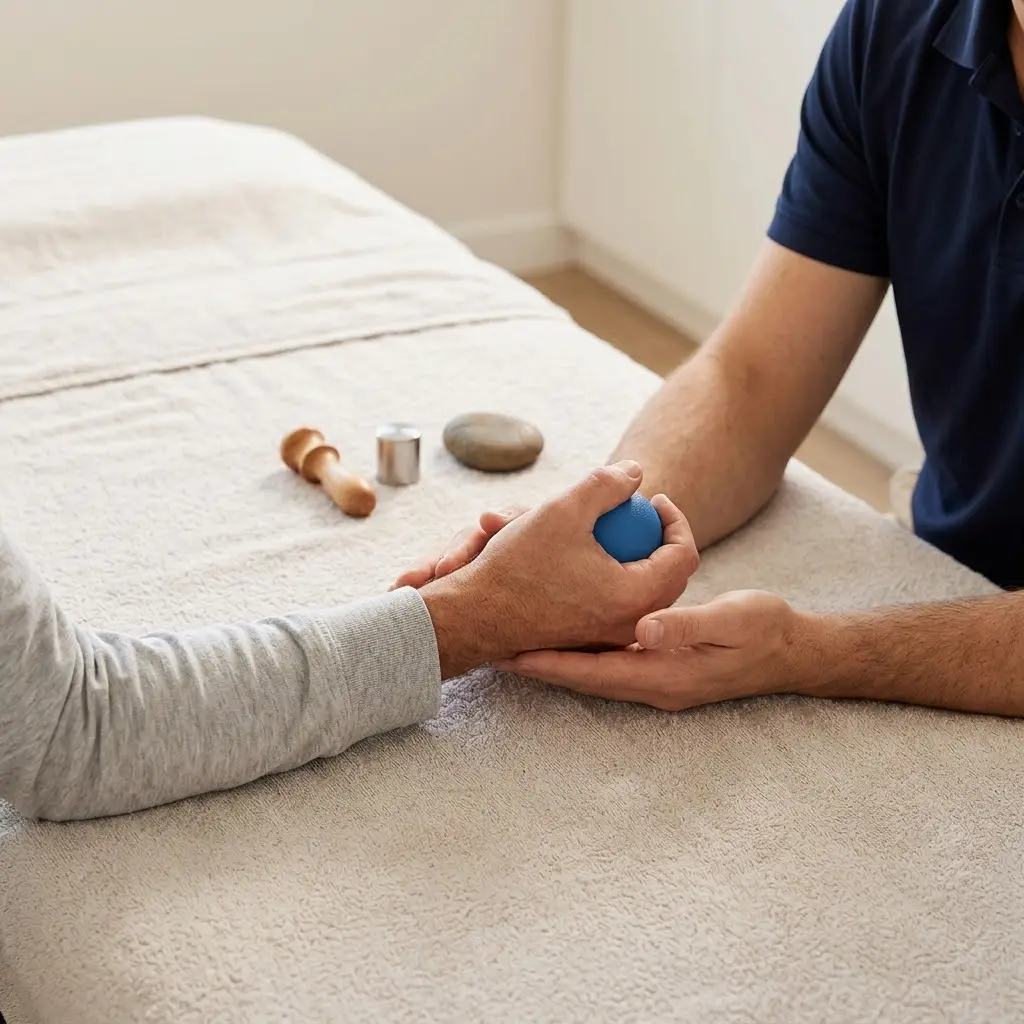
At the first session, he had very little voluntary control of his right arm and hand, with reduced sensation below the elbow. His right leg took little weight, and he used a wheelchair and walking aids. Standing was painful, and he relied heavily on his left leg to move around.
Assessment
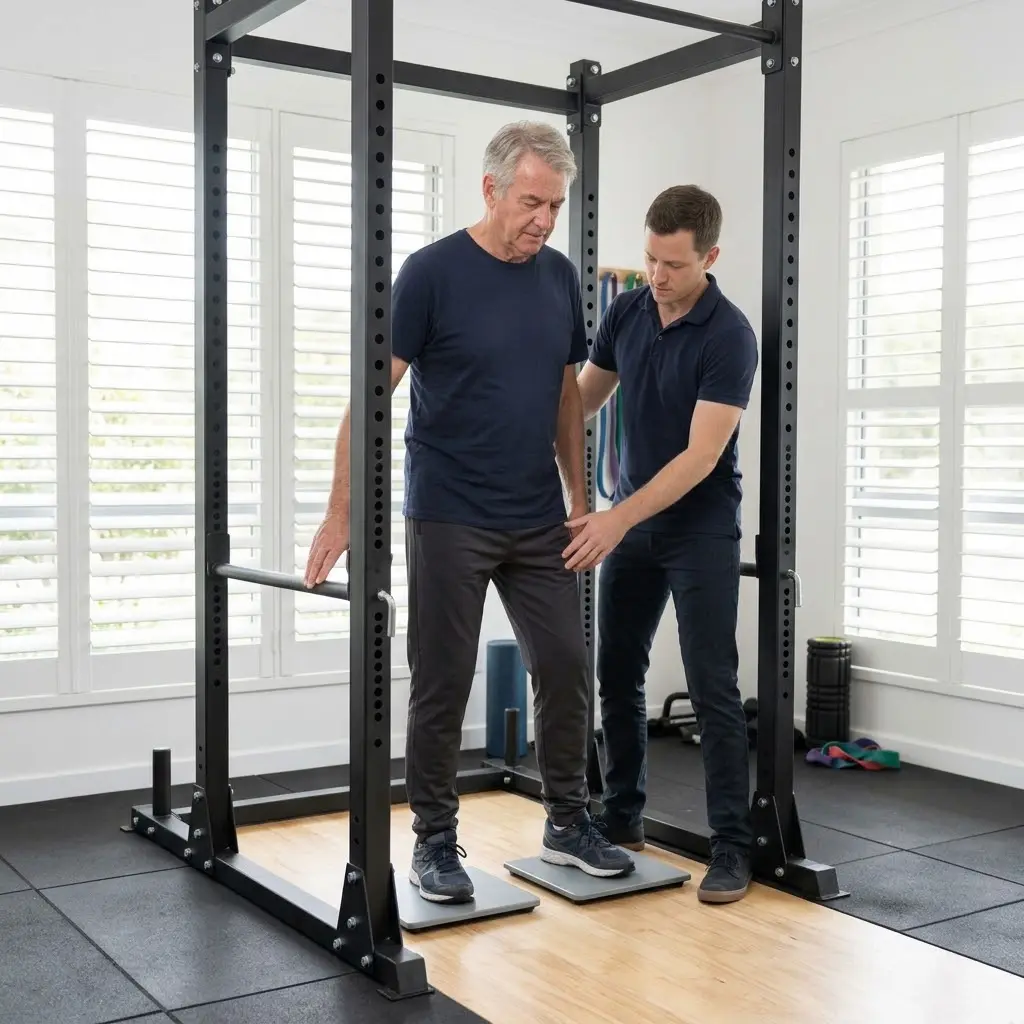
Force plate testing showed a large difference between his two legs, with most of his body weight going through the left leg and very little through the right. Side-to-side control of the right leg was minimal, and its active range of movement was very limited. His breathing pattern and movement responses were also noted.
Approach
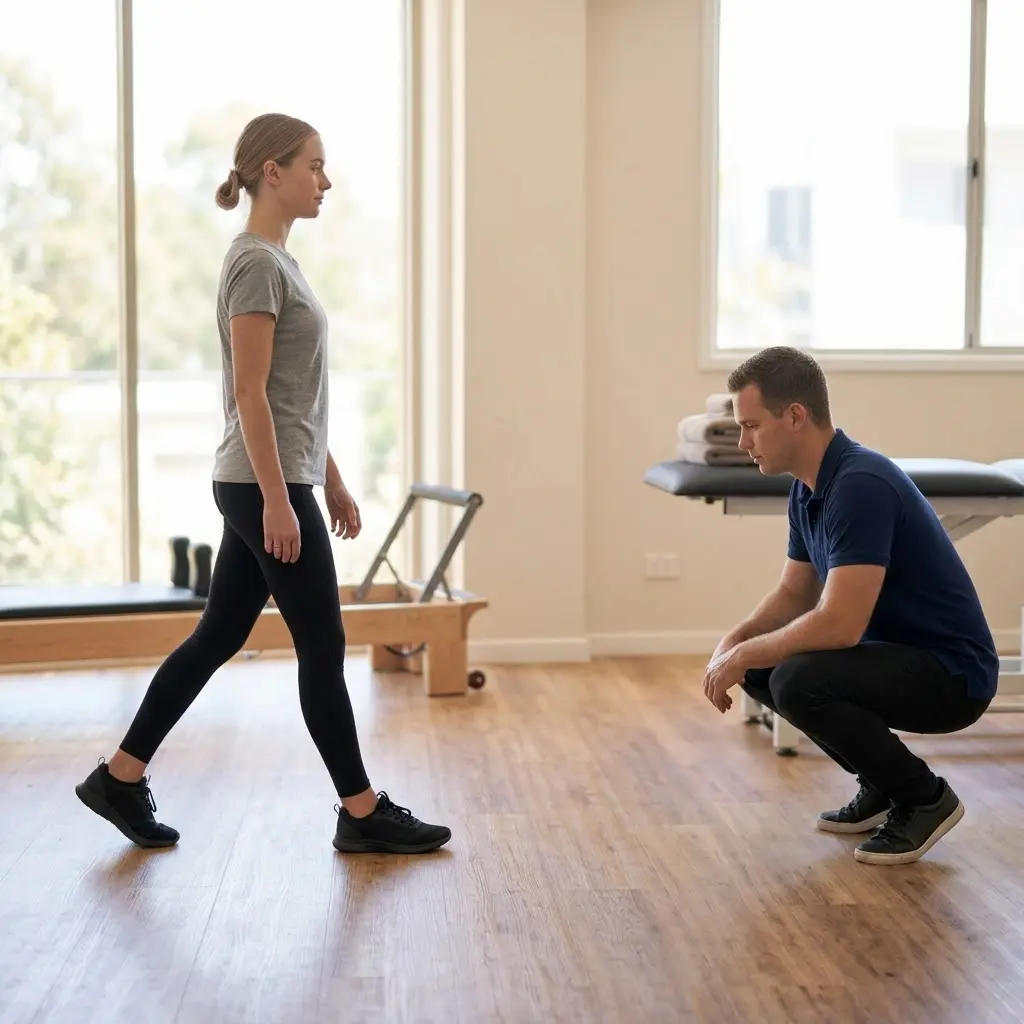
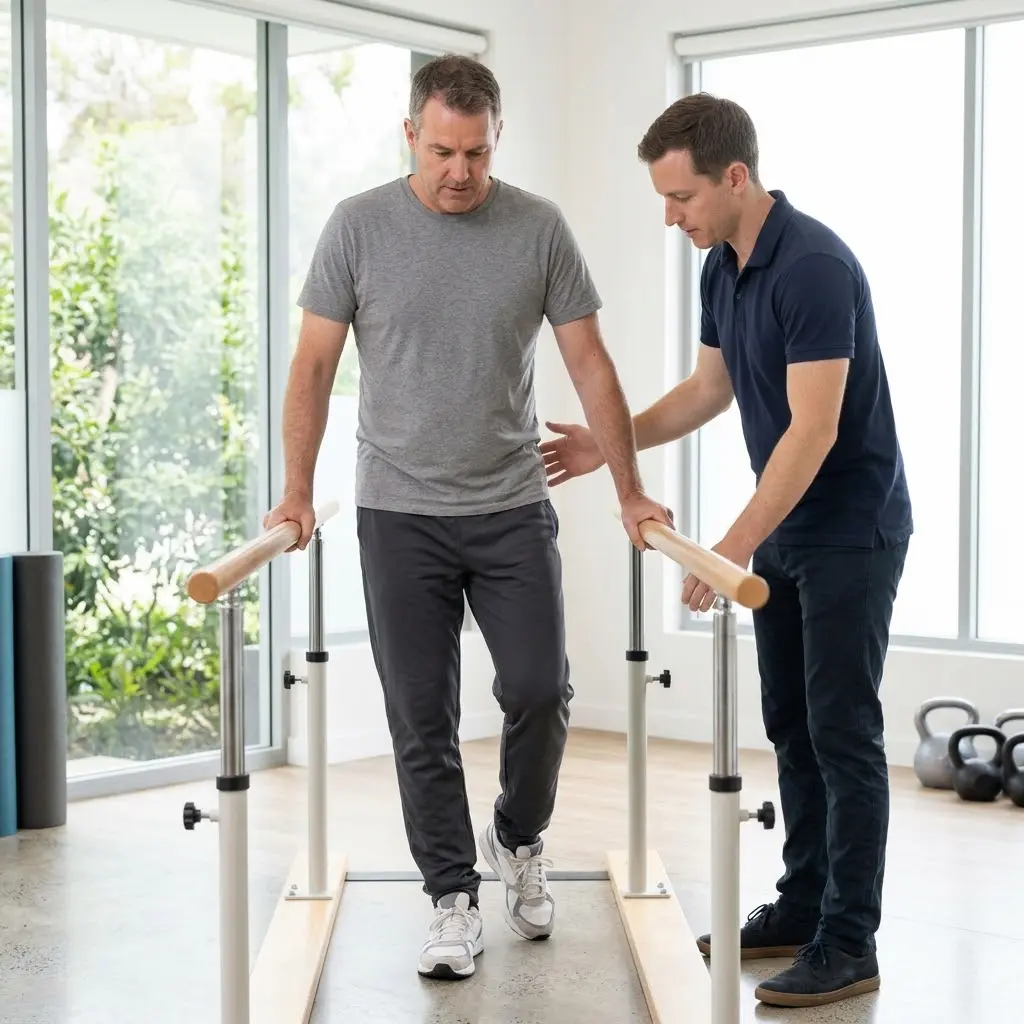
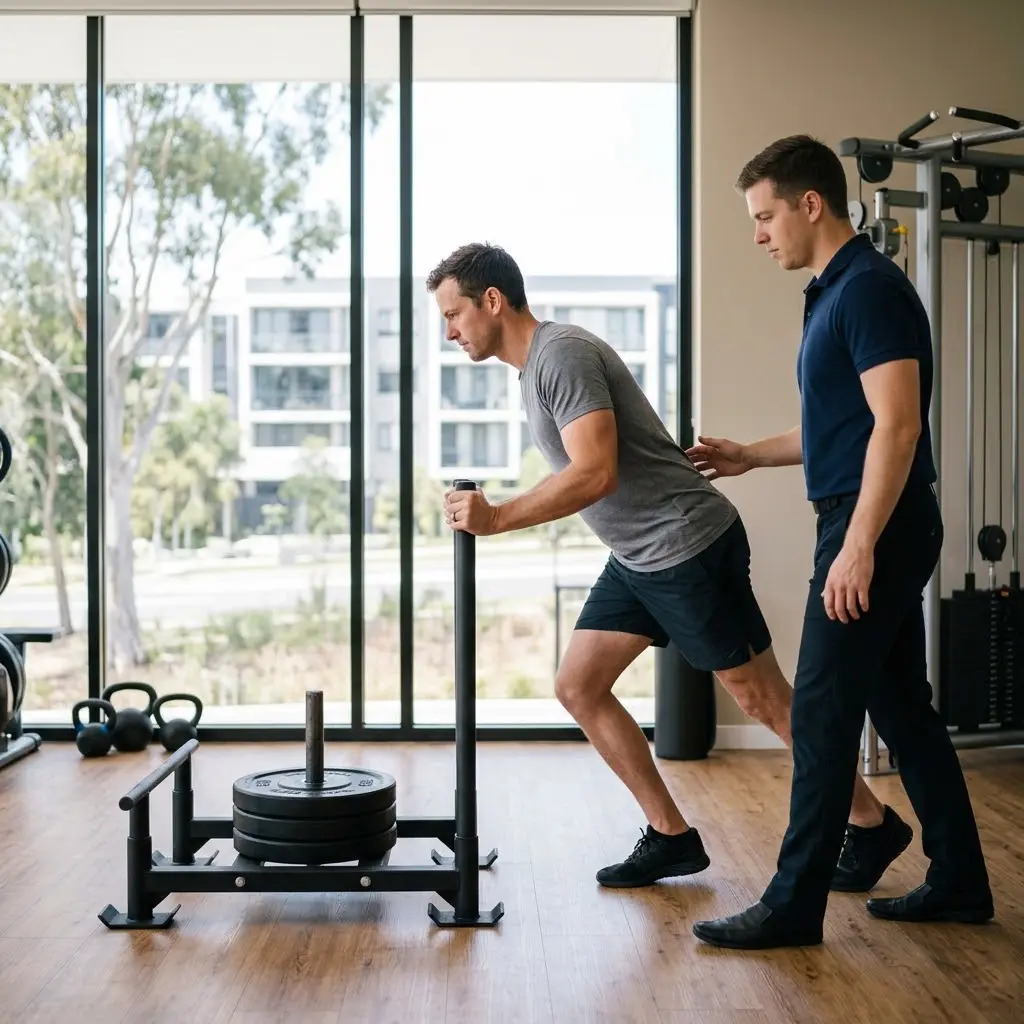
Sessions focused on graded, task-specific movement training, feedback during movement, breathing mechanics and gradually building how much load he could tolerate through the right side. Standing tasks were done inside a full power rack (a four-post squat cage) with the safety bars set at hip height, with hands-on support throughout.
What was measured and observed
- Weight distribution: force plate readings in standing moved towards a near-even split between both legs, and he reported standing without significant pain.
- Right leg: he became able to lift the leg and move it sideways, and active control during bending and straightening reached roughly 60–70% of its available range.
- Hips and squat: seated hip bending improved without needing compensatory support, and a deeper squat became possible.
- Right arm: small voluntary finger movements began to appear, and shoulder control in lifting and reaching improved.
Reflection
Many years after a stroke, it can be assumed that little will change. This case is a reminder that careful, graded and measurable movement training may still be worth exploring. Force plate data gave both the client and his care team an objective way to see changes in how he stood and loaded his legs.
These were changes in task performance, not in the underlying condition, and they may reflect other care and individual factors. People living with the effects of stroke should plan any exercise program together with their GP and treating team. New or sudden weakness, numbness, facial drooping, speech difficulty or vision change is a medical emergency. Call 000.
Related case reflections
- Case 30: CMT1 and Functional Strength Training
- Case 22: Guillain–Barré Syndrome and Collaborative Movement Care
- Browse all case reflections